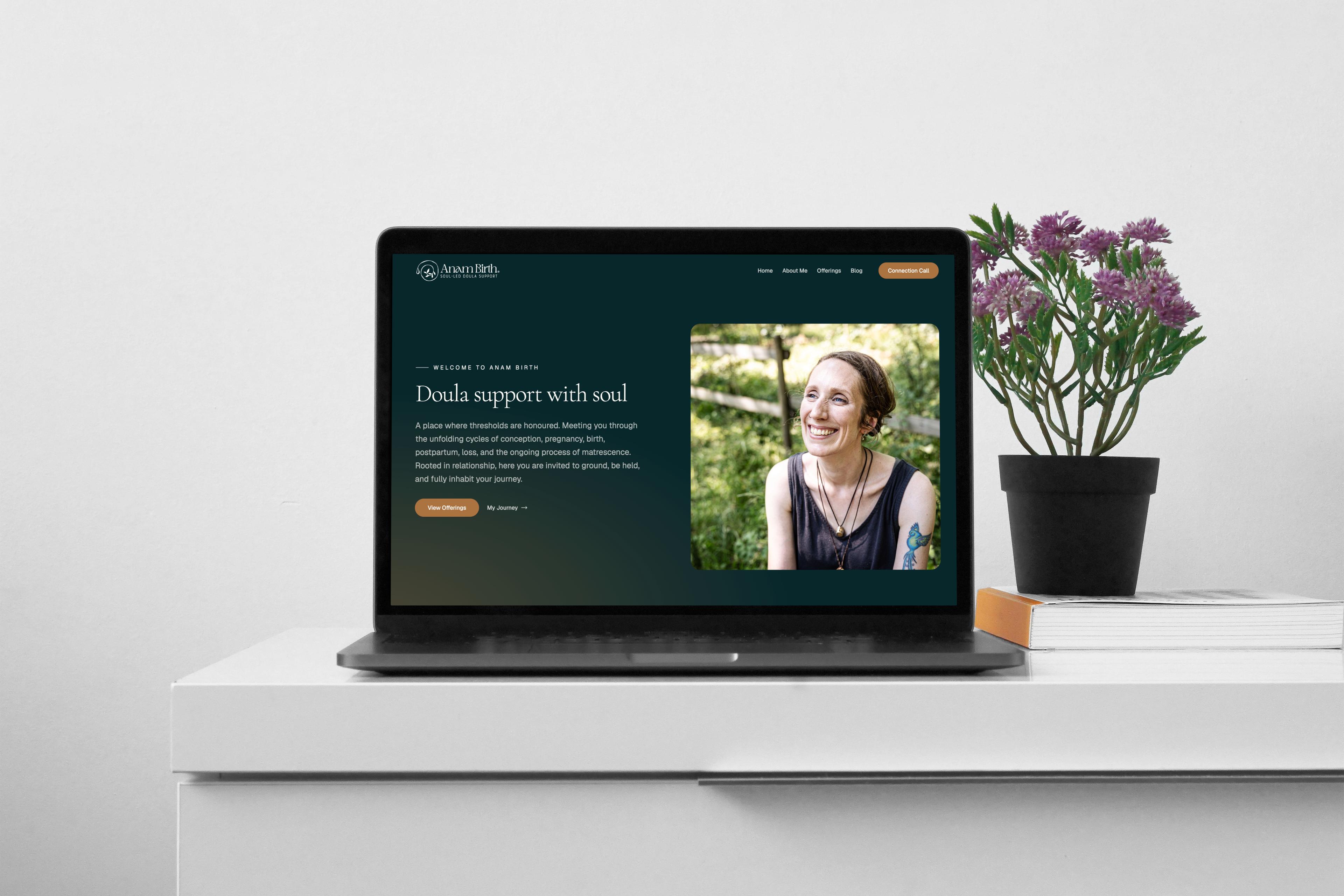
Anam Birth | Doula
Richard Griffiths / 1 November 2026
This project involved building a website for a doula to showcase her services and attract new clients.
One of the main requirements was that she needed to be able to manage the website herself, without relying on a developer every time something needed updating. So, rather than building a simple website, the project also involved creating a flexible content management system (CMS) that would allow her to update pages, manage services and publish blog posts.
Alongside this, the website needed a way to capture new enquiries, with online forms that would help turn visitors into potential clients.
Features
- Responsive design: Making sure the website looked and worked well across mobile, tablet and desktop devices.
- Lead generation: Contact forms that allowed visitors to enquire about the services on offer.
- Friendly and engaging design: Creating a welcoming experience that reflected the client's personality and services.
- Website content builder: A flexible CMS that allowed the client to manage pages, services and blog posts without needing technical knowledge.
- SEO: Optimising the website to help improve its visibility in search engines and attract potential clients.
- Email notifications: Automatically sending email notifications when someone submitted a form, while also storing submissions in the CMS.
- Analytics: Giving the client insight into how visitors were using the website.
Technologies
- Next.js: Used to build the website, handling both static and dynamic content.
- Tailwind CSS: Used to create a responsive, custom design.
- Payload CMS: Used to build a flexible content management system tailored to the client's needs.
Infrastructure & DevOps
As part of the project, I also wanted to explore a few areas outside of the website itself, particularly around hosting, deployment and keeping everything running smoothly.
- Coolify: Exploring self-hosting using a dedicated server to host and manage the application.
- CI/CD: Setting up automated builds and deployments using GitHub and Docker.
- Security: Applying best practices to help keep the server and application secure.
- Monitoring: Keeping track of the application's availability and helping identify issues when something goes wrong.